


The bathroom has undergone an amazing transformation in recent years. It used to be a purely functional place, but today it is a retreat for many to take a deep breath, relax, and feel good.
We spoke with interior designer Stefanie Stöhr. She lives and works in Munich and has been designing high-quality interiors for private individuals, companies, and hotels for many years. In our conversation, she explains why the bathroom is a very special room for her, how design and health are connected, and why a toilet stool is no longer a taboo subject.
Stefanie, what fascinates you about bathrooms?
For me, the bathroom is the most honest room in the house. It's where we encounter ourselves – completely unfiltered. It's a place where body, water, light, and materials come together.
I'm drawn to this contrast: warmth meets cold, intimacy meets function, softness meets stone. No other room combines so many contrasts, and that is precisely where its magic lies.
As an interior designer, I try to harmonize these contrasts. Cold materials such as stone or ceramics suddenly take on a soft, inviting effect when combined with warm light and natural colors. And when you integrate wood, linen, or lime plaster, you immediately create a feeling of calm and naturalness.
What role does health play in this?
A very central one. In the past, the bathroom was primarily a place for hygiene. Today, we see it as a space for well-being and regeneration. Light, air, acoustics, materials—all of these things have a direct effect on our bodies. When a bathroom radiates comfort and clarity, it has an incredibly soothing effect.
I think the bathroom can have an almost therapeutic effect: the warm water, the soft textures, the scent of soap – all of these things appeal to our senses. And if the room is also beautifully designed, it helps us to relax and recharge our batteries.
Health and design – this brings us to a topic that is becoming increasingly important in your field: the toilet stool. Many people find it practical, but visually unappealing. What is your opinion?
I see it quite differently! A toilet stool for adults is a great example of how design and function can come together. For a long time, such products were considered medical aids that were best kept hidden away. But that is changing – and that's a good thing.
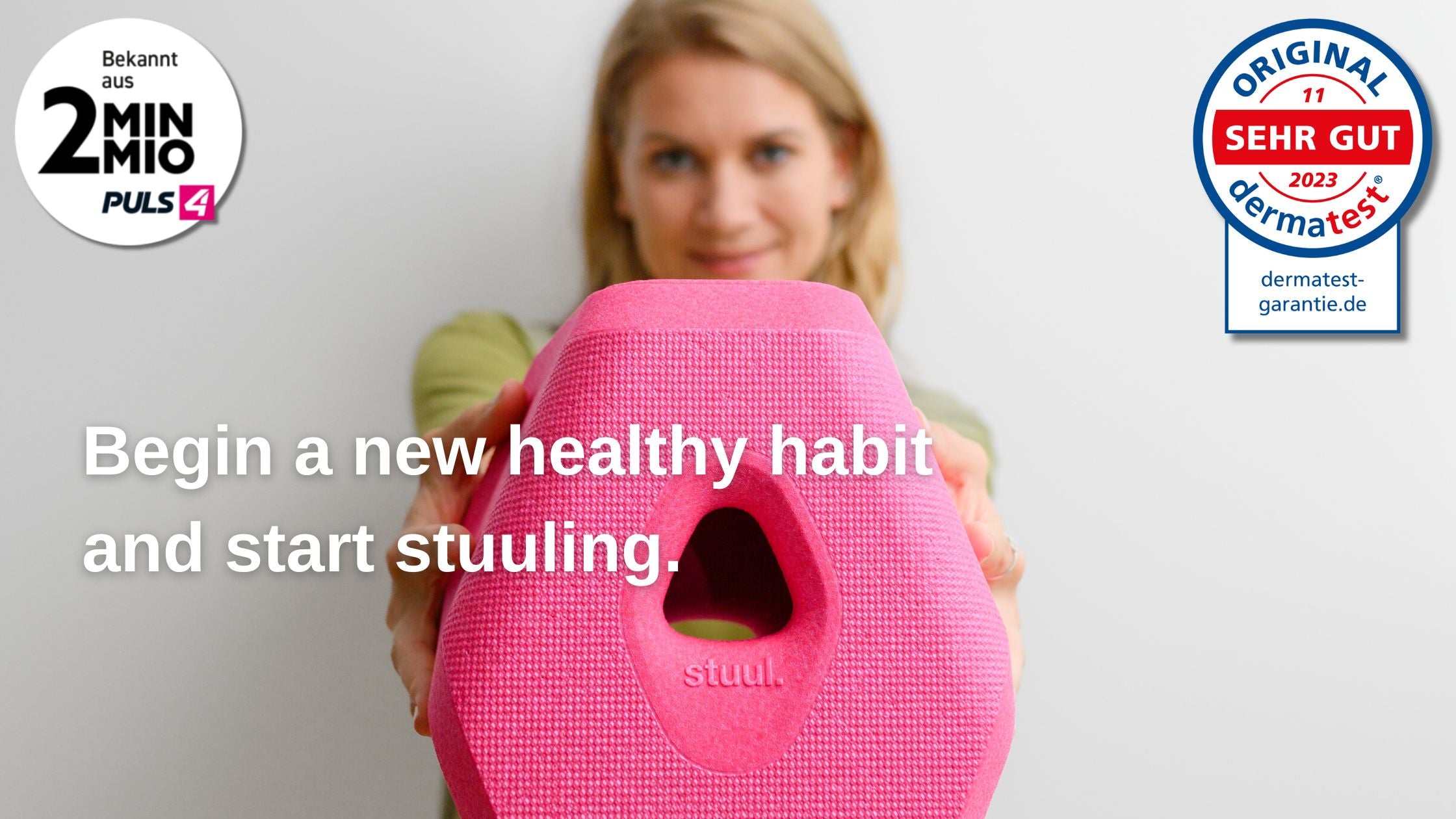
There is a growing trend towards allowing things that are good for our bodies to also be aesthetically pleasing. The stuul® designer toilet stool is a great example of this. It is lightweight, functional and, at the same time, an aesthetic object. With its clean lines and modern colors, it blends harmoniously into the bathroom – almost like a small piece of designer furniture. And what's also great is that the stuul is available in many different colors, allowing it to be integrated into any bathroom design.
I believe that when a product promotes health and looks good at the same time, it's not only smart, but also contemporary design in the best sense of the word.
How important is it to plan proportions, lines of sight, and material contrasts in the bathroom—and what typical mistakes do you see time and time again?
That's a very important point. In many bathrooms, a lot of money is invested in beautiful materials, but too little attention is paid to the overall picture. The right proportions are what determine whether a bathroom appears calm and harmonious—or restless and cramped.
For example, if floor and wall tiles in different formats meet or joint lines are not considered, this creates visual unrest. Too many materials or color schemes in a small space can also overwhelm the eye. I therefore like to work with clear lines, recurring structures, and balanced surface areas.
Another issue is the lines of sight. I consider this during the planning stage: What do I see when I open the door? Is the washbasin the focal point, does the light fall on a beautiful wall or on the radiator? Small decisions like these change the entire effect of the room.
And finally, the contrasts in materials – they make a bathroom exciting without making it restless. A matte stone floor combined with shiny ceramics, warm wood with cool concrete – contrasts like these create depth and atmosphere.
My tip: you can recognize a good bathroom by the fact that you can't quite put your finger on why it feels so pleasant. It just feels right – and that's almost always down to harmonious planning in the details
Finally, do you have a few simple tips on how to transform your bathroom into a small wellness oasis?
I'd be delighted to share them! You don't need to undertake a major renovation—it's often the little things that make the biggest difference. The important thing is to design consciously: with light, materials, scents, and a personal touch. Here are my best tips:
- Use light consciously: bright and clear in the morning, soft and warm in the evening. Indirect or dimmable light has an immediately relaxing effect.
- Use natural materials: wood, stone, or linen instantly bring calm, warmth, and naturalness to the bathroom.
- Incorporate textures: A beautiful bath mat, high-quality towels, and curtains create comfort and take away the austerity of the room.
- Integrate plants: They love humidity and improve the indoor climate—ferns, bamboo, or ivy work almost anywhere.
- Bring in fragrance: Lavender relaxes, lemon invigorates, eucalyptus clarifies – fragrances create atmosphere and instantly change the mood.
- Create order: Tidy surfaces act like a reset for the brain. Baskets, trays, and closed storage help with this.
- Be bold with color! In 2025, bathrooms will experience an exciting color renaissance, bringing a breath of fresh air to rooms that are often perceived as sterile. Bold and expressive colors are at the forefront, with shades of green, ochre, and rich browns being particularly popular. These earthy hues create a warm and inviting atmosphere that transforms the bathroom into a place of relaxation.
- For guest bathrooms, you can also cover the entire walls with eye-catching wallpaper, add a large mirror, and the small room will become a real eye-catcher.
- Mirrors! Especially in small bathrooms, large wall mirrors or mirrored furniture are an excellent way to visually enlarge the room and give it depth.
- Show your personality: a favorite picture, handmade ceramics, a vase with fresh flowers—small details make the room your own.
When you bring all these elements together, you create an atmosphere where you can truly relax. The bathroom then becomes not just a functional place, but a place of self-care—a space where body and mind can recharge in equal measure.
Thank you, Stefanie - that was really inspiring!
“Thank you! The bathroom is a special place. If you pay attention to it, it can become a real source of strength in everyday life.”
---
MORE ABOUT OUR INTERVIEW PARTNER
STEFANIE STÖHR, INTERIOR DESIGNER

For complete bowel emptying without residues.


🤩25,000+ happy stuul owners have already improved their gut health.
stuul® is a truly unique toilet stool - Light as a feather, always nice and warm on the feet and discreetly stowable.